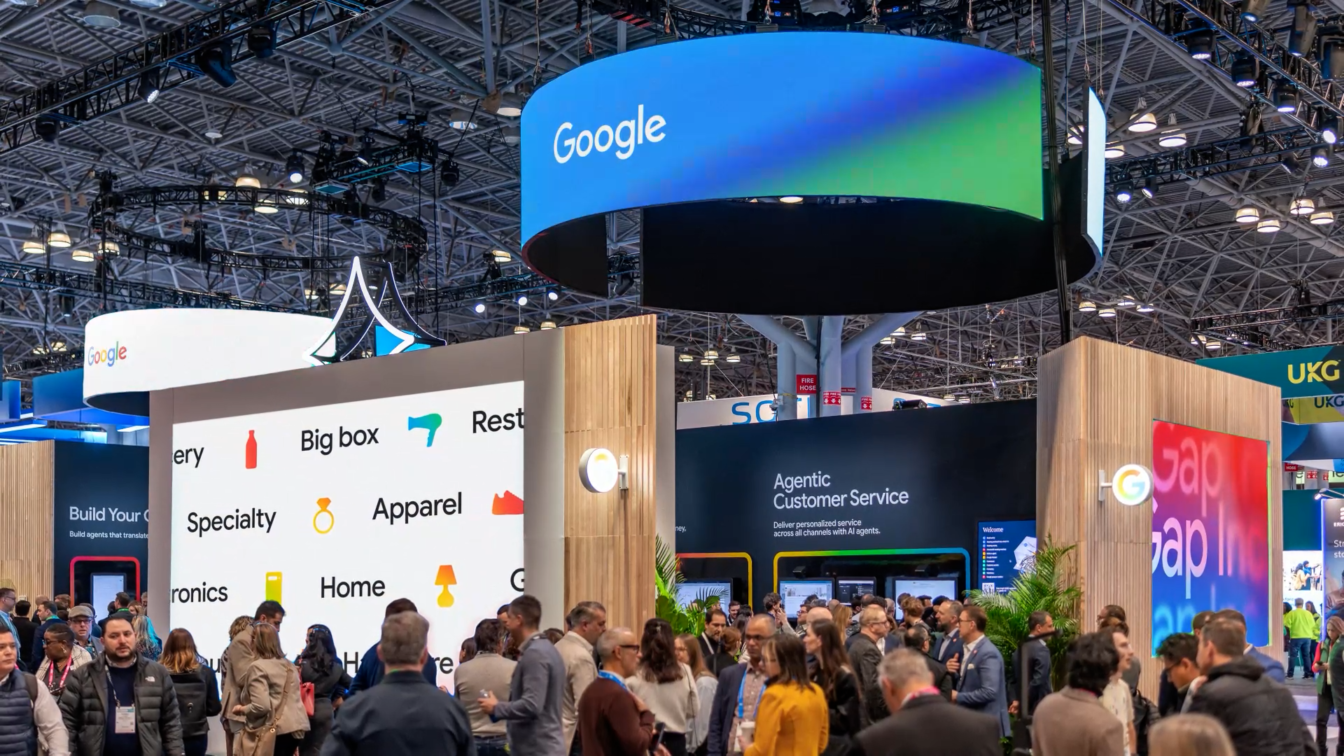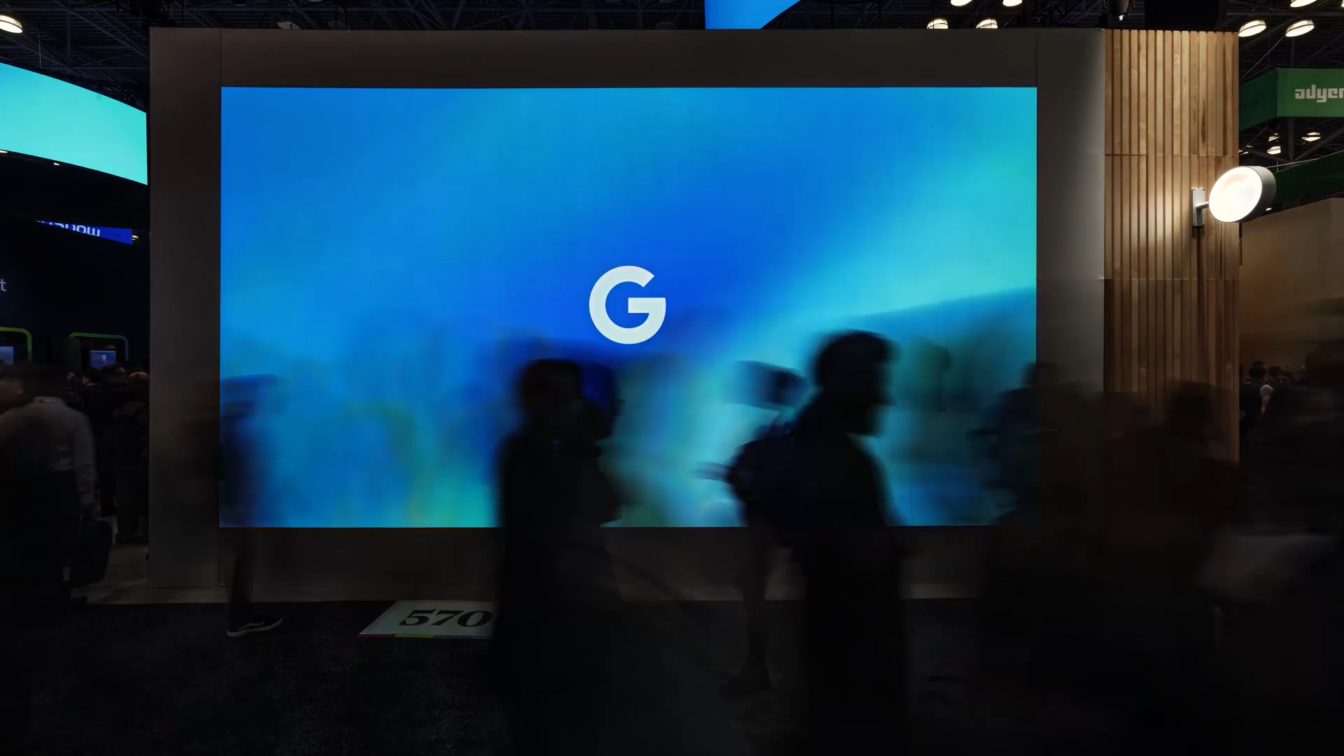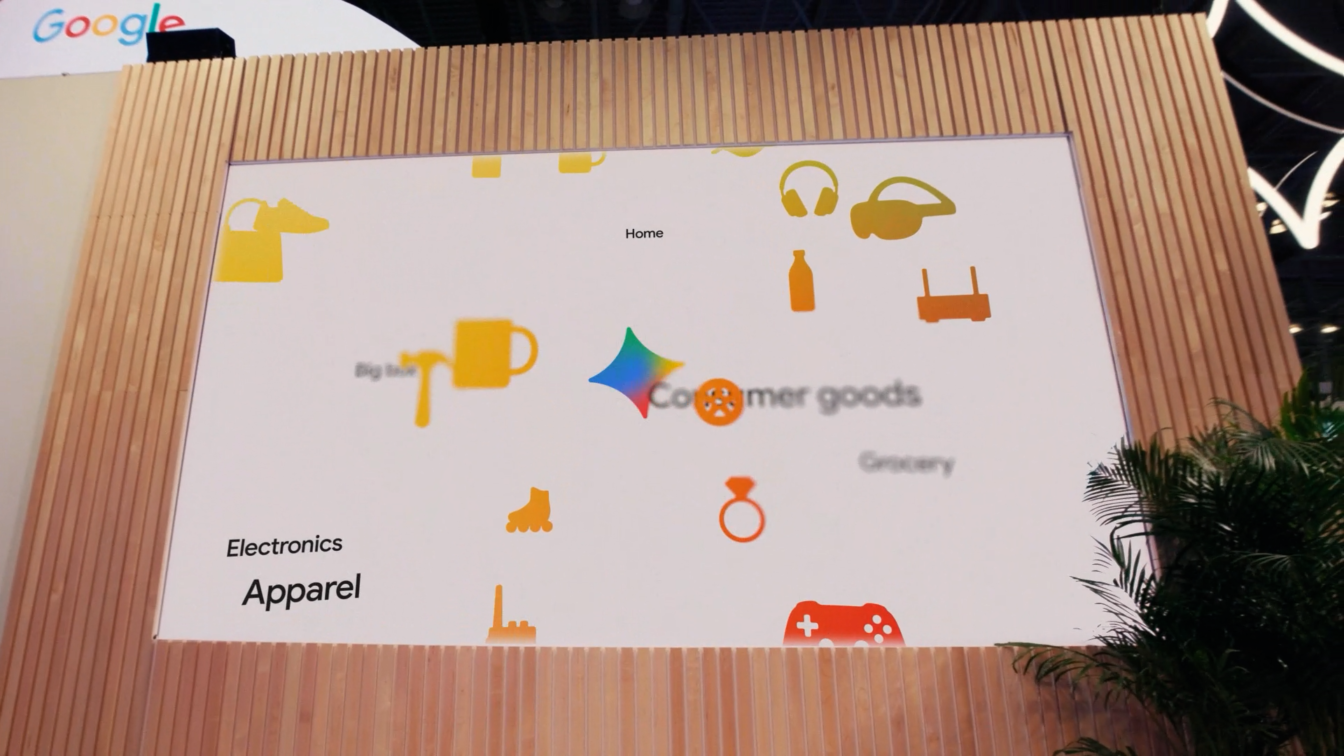
For NRF 2026, Google needed a physical booth experience built from multiple screens, running simultaneously, inside a high-traffic, visually dense environment.
This was not a single brand story. The space needed to hold the Google core brand alongside Google Cloud and Google Gemini. Each carries its own visual language, point of view, and way of showing up. All of that needed to coexist in one shared space, at the same time.
In a complex brand ecosystem, individual expressions can be well-defined in isolation. The challenge emerges when those expressions need to coexist.
At NRF, multiple screens, brand narratives, and brand layers were visible at once. The question was not whether each brand could look correct on its own, but whether they could move together without competing or collapsing into sameness.
The work was rooted in a deep familiarity with the Google brand ecosystem.
Through long-term partnership, we’ve built an internal understanding of how Google’s brand architecture operates, how motion behaves across its ecosystem, and how different brand expressions are designed to coexist. That fluency allowed us to work from what was already present, rather than impose a new organizing layer.
We focused on the intersection of identities. Shared behaviors, compatible tempos, and moments where one brand could lead while another supported. Motion decisions were made in context, with each screen designed in response to the others rather than in isolation.
The result was a space where Google, Google Cloud, and Gemini were all engaging, recognizable, and operating as part of a single environment. For audiences, the experience felt cohesive. For the brand, nothing was compromised.
This project reinforced that strong motion outcomes depend on deep brand understanding. Not surface familiarity, but a working knowledge of how a brand is built. Its intentions, its architecture, and how its systems are designed to operate together.